+ - 0:00:00
Notes for current slide
Notes for next slide

Severance, parallels and integration

🚗🚌🚲🚶
methods for assessing the active travel impacts of major transport infrastructure projects

Robin Lovelace, Malcolm Morgan, Craig Morton, Anna Goodman

Cycling and Society, Bristol
2018-09-06

1 / 25

Contents

  • Context
  • The impacts of transport infrastructure
  • Methods
  • Results and discussion
2 / 25

Research context

  • Work funded as part of the Propensity to Cycle Too (PCT) project
  • Focus: map spatial distribution of potential for cycling growth
  • At a national scale
3 / 25

Academic context

  • Much research into 'where to build'
4 / 25

Academic context

  • Much research into 'where to build'

  • But little that is systematic/objective/reproducible

4 / 25

Academic context

  • Much research into 'where to build'

  • But little that is systematic/objective/reproducible

  • Very little at 'route network' level (Buehler and Dill, 2016)

4 / 25

Academic context

  • Much research into 'where to build'

  • But little that is systematic/objective/reproducible

  • Very little at 'route network' level (Buehler and Dill, 2016)

Tool Coverage Public access Level
Propensity to Cycle Tool England Yes A, OD, R, RN
Prioritization Index Montreal No P, A, R
PAT Parts of Dublin No A, OD, R
Usage intensity index Belo Horizonte No A, OD, R, I
Bicycle share model England, Wales No A, R
Cycling Potential Tool London No A, I
Santa Monica model Santa Monica No P, OD, A
4 / 25

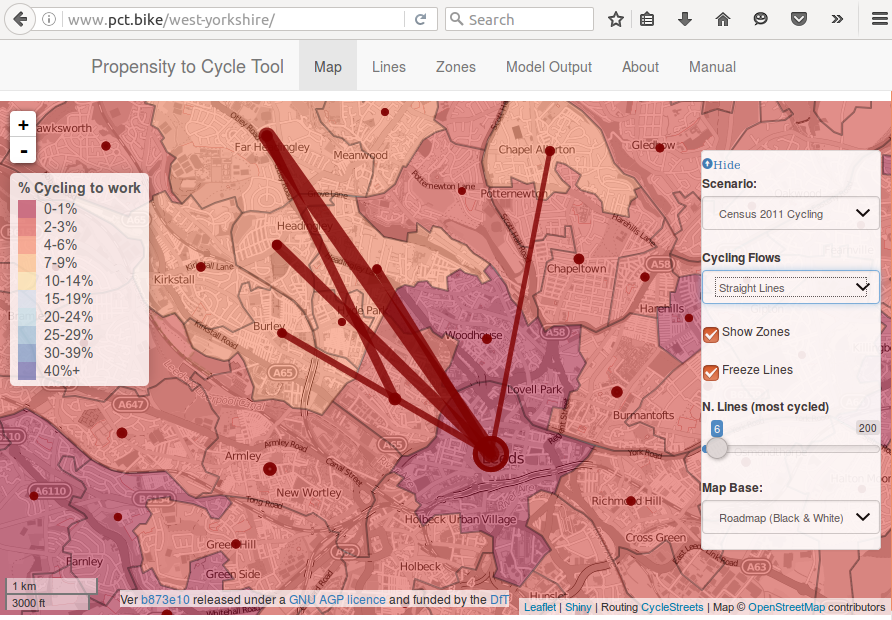
Central concept: desire lines
5 / 25

Central concept: desire lines

  • Origin-destination can be mapped as 'desire lines'
  • Cycling desire lines will shift with cycling uptake (Lovelace, Goodman, Aldred, Berkoff, Abbas, and Woodcock, 2017)
5 / 25

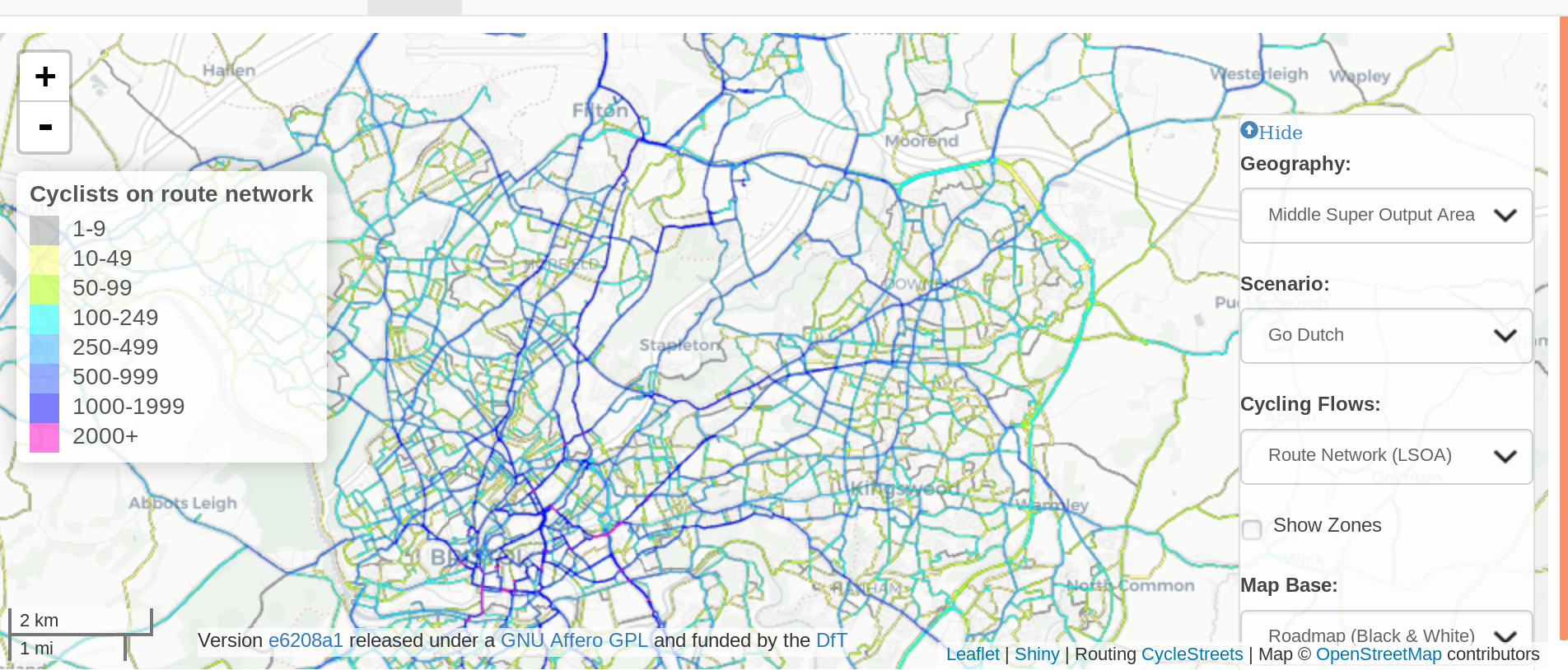
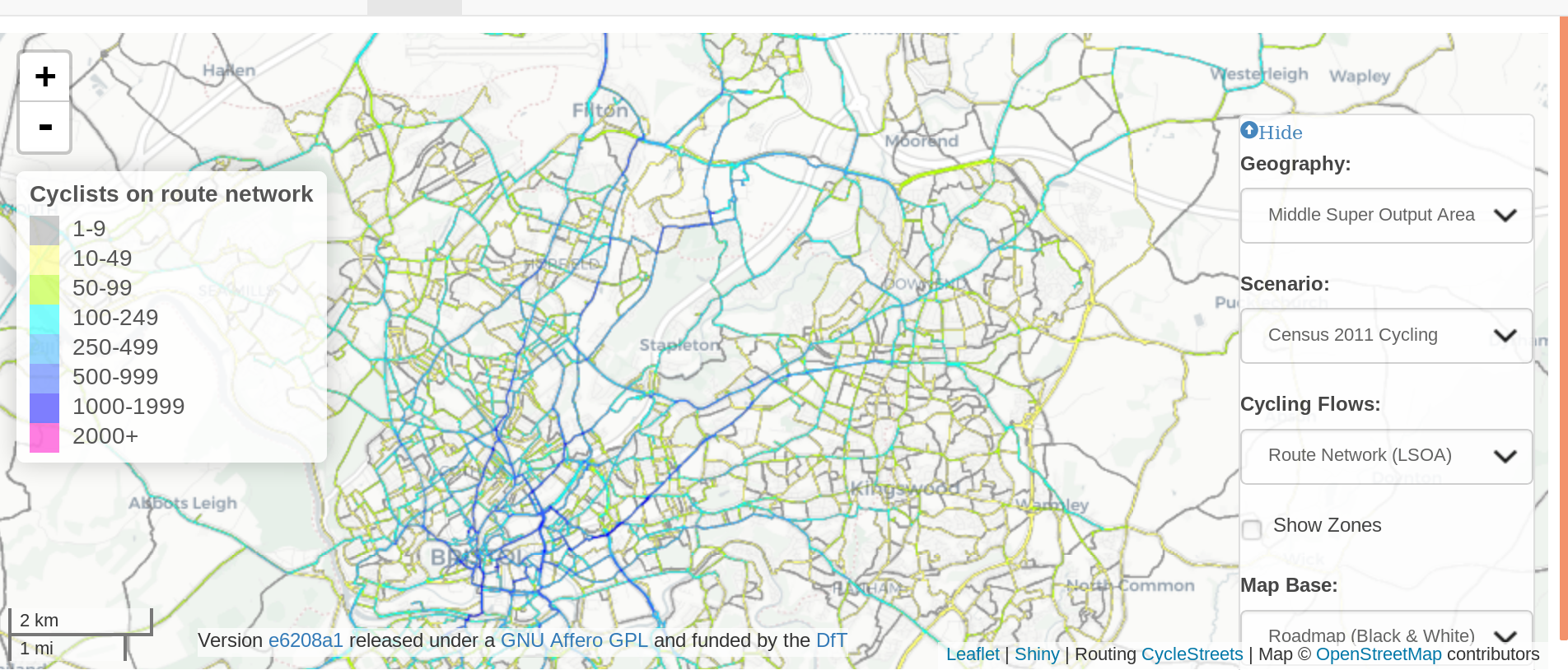
Scenario shift in network load (source: pct.bike)
6 / 25

Limitations

  • No account of future developments
7 / 25

Limitations

  • No account of future developments

  • Currently limited to commuter cycling (funding to add schools)

7 / 25

Limitations

  • No account of future developments

  • Currently limited to commuter cycling (funding to add schools)

  • No integration with other transport modes

7 / 25

Limitations

  • No account of future developments

  • Currently limited to commuter cycling (funding to add schools)

  • No integration with other transport modes

  • Little account of existing/future infrastructure

7 / 25

Policy context

8 / 25

The scale of HS2

9 / 25

The scale of HS2

  • 330 miles of track (~£100k/m)
  • £55 billion estimated cost (~£40/person/yr during build)
  • 2026 - 2033 estimated completion dates (phase 1 and 2)
9 / 25

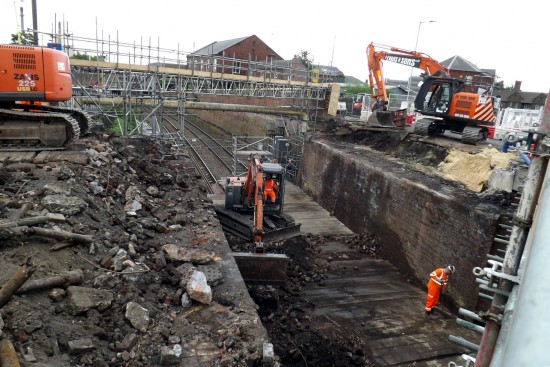
The impacts of infrastructure are international

  • Roads and other major structures are being constructed on a huge scale worldwide
  • But there is little assessment on their active travel impacts
  • Credit: flickr user thestuff

10 / 25

Research into impacts of roads

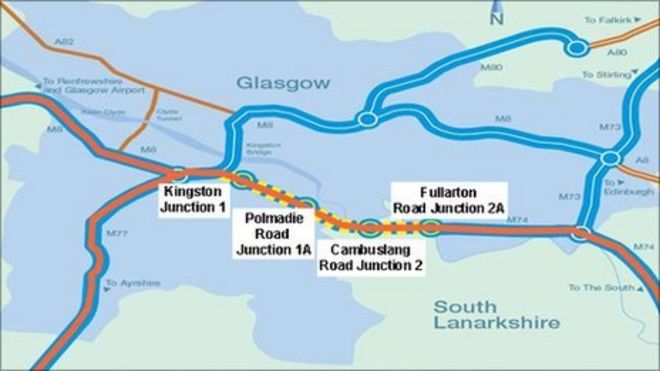
The extension of the M74 motorway = 'natural experiment':

  • People who live near motorways seem to be less physically active (Ogilvie, Mitchell, Mutrie, Petticrew, and Platt, 2006)
  • And more car dependent
11 / 25

Research into impacts of roads

The extension of the M74 motorway = 'natural experiment':

  • People who live near motorways seem to be less physically active (Ogilvie, Mitchell, Mutrie, Petticrew, and Platt, 2006)
  • And more car dependent

  • Limited evidence of impacts on active travel
11 / 25

Research into impacts of roads II

A recent review of impact assessment methods in the English context found that an increasingly wide range of methods and approaches were being used (Tajima and Fischer, 2013):

  • Environmental Impact Assessment (EIA)
  • Strategic Environmental Assessment (SEA)
  • Health Impact Assessment (HIA)
  • Gender Impact Assessment (GIA)
  • Equality Impact Assessment (EqIA)

  • But overall not a huge amount of research in the area, particularly in relation to the impact on active travel:

12 / 25

Research into impacts of roads II

A recent review of impact assessment methods in the English context found that an increasingly wide range of methods and approaches were being used (Tajima and Fischer, 2013):

  • Environmental Impact Assessment (EIA)
  • Strategic Environmental Assessment (SEA)
  • Health Impact Assessment (HIA)
  • Gender Impact Assessment (GIA)
  • Equality Impact Assessment (EqIA)

  • But overall not a huge amount of research in the area, particularly in relation to the impact on active travel:

  • "there is very little empirical data on the impact of road transport interventions", aside from injury reduction estimates (Thomson, Jepson, Hurley, and Douglas, 2008)

12 / 25

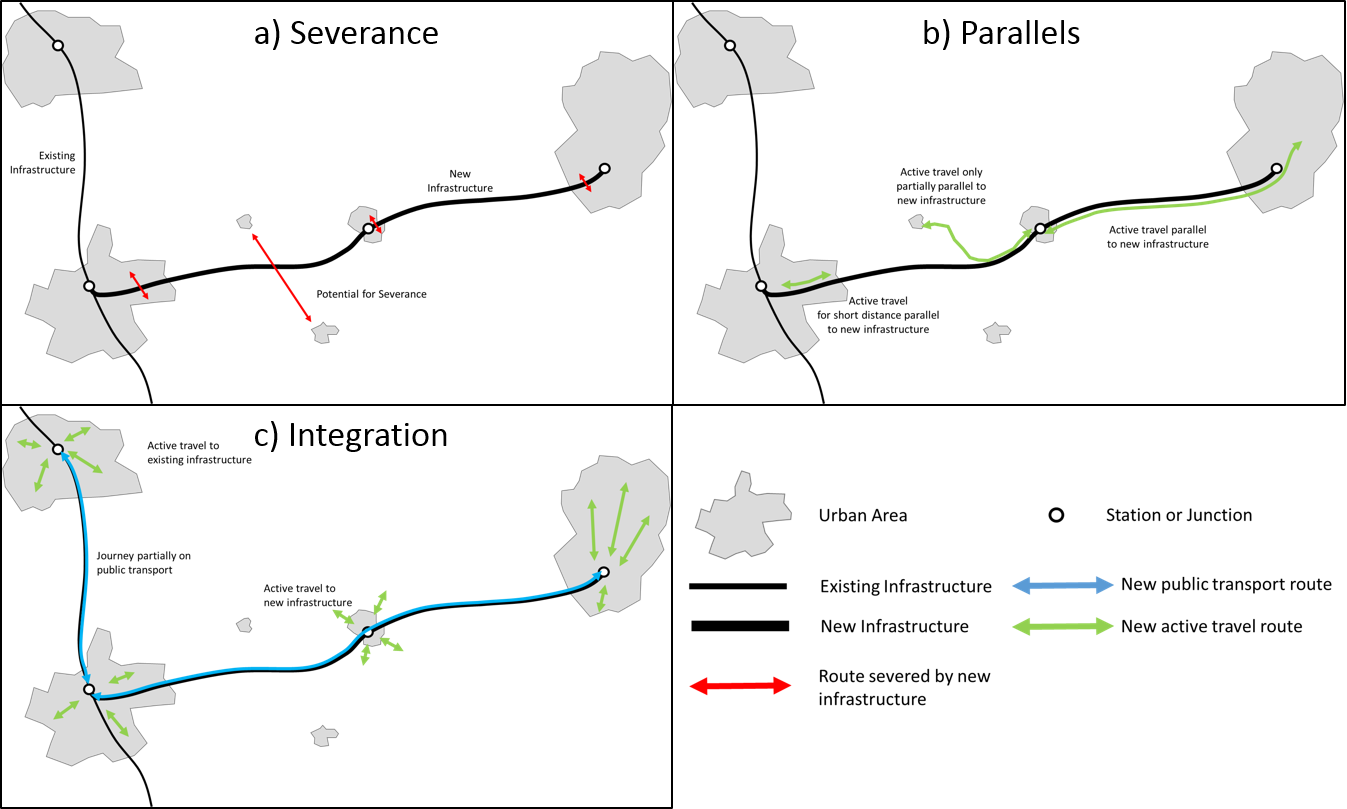
Active travel impacts: a typology

A typology of active travel options.

13 / 25

Methods

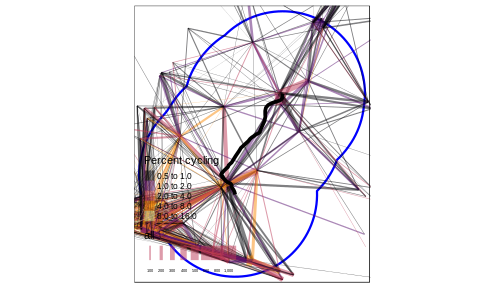
Overview of the Lewes-Uckfield line with a 10 km buffer (blue). Width is proportional to the number of commutes.

Overview of the Lewes-Uckfield line with a 10 km buffer (blue). Width is proportional to the number of commutes.

14 / 25

Parallels (Credit: Philip McErlean, CC )

15 / 25

Cycling potential parallel to the route

3 stage methodology to identify parallel lines:

16 / 25

Cycling potential parallel to the route

3 stage methodology to identify parallel lines:

  • Subset desire lines whose cetrepoints are near to the proposed route
16 / 25

Cycling potential parallel to the route

3 stage methodology to identify parallel lines:

  • Subset desire lines whose cetrepoints are near to the proposed route

  • Segment the proposed route

16 / 25

Cycling potential parallel to the route

3 stage methodology to identify parallel lines:

  • Subset desire lines whose cetrepoints are near to the proposed route

  • Segment the proposed route

  • Calculate the angle of each route

16 / 25

Cycling potential parallel to the route

3 stage methodology to identify parallel lines:

  • Subset desire lines whose cetrepoints are near to the proposed route

  • Segment the proposed route

  • Calculate the angle of each route

Then keep only lines parallel to proposed route segments

16 / 25

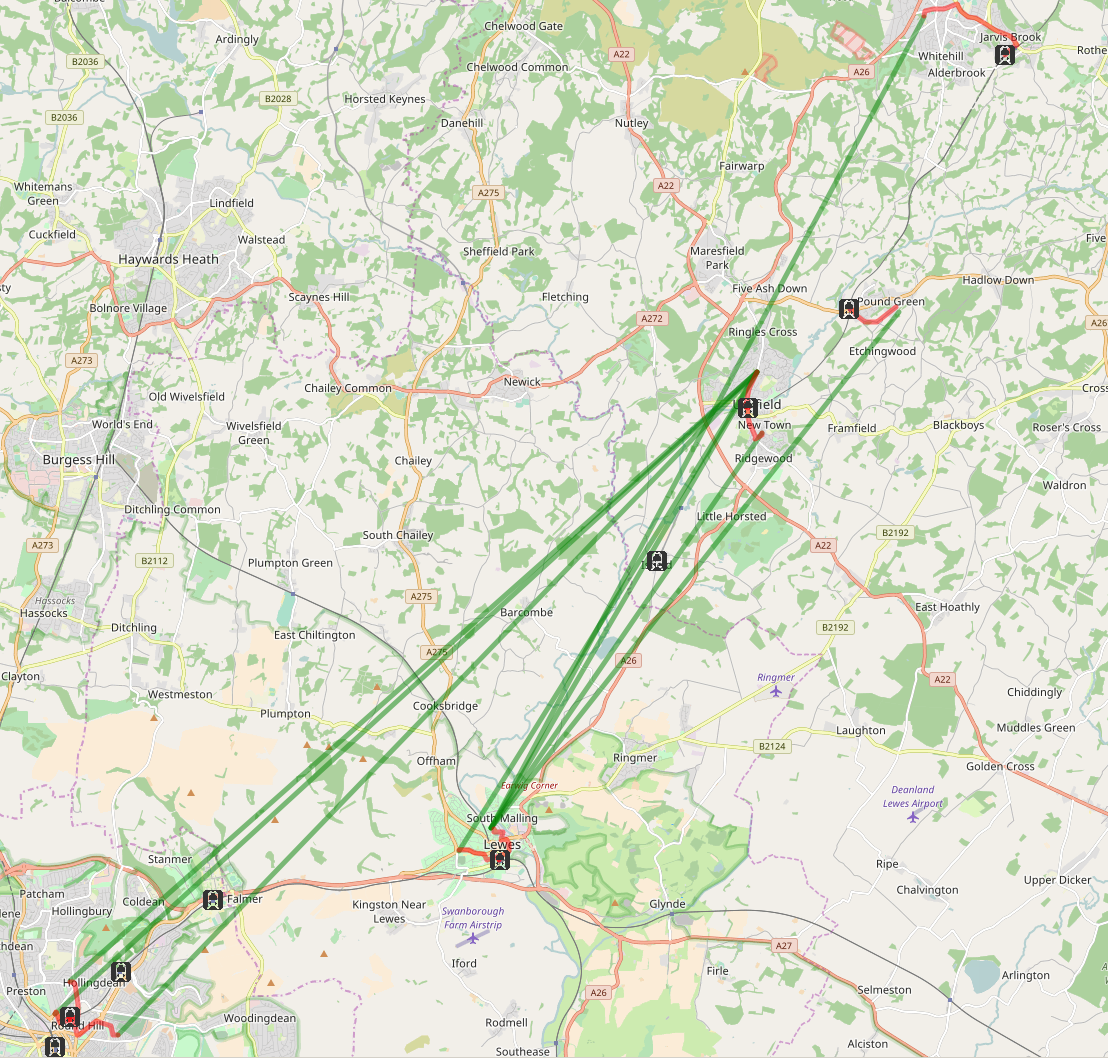
Subsetting desire lines by centre point proximity
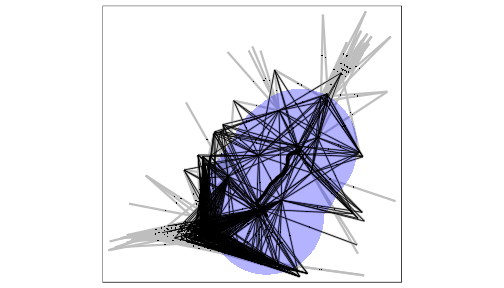
Illustration of the 'line centre point' subsetting method

17 / 25

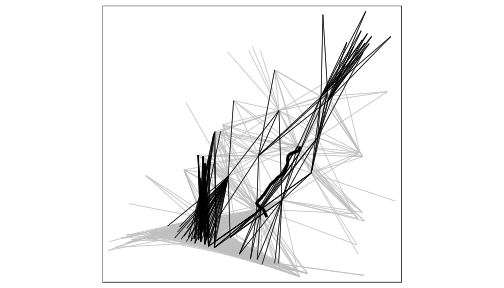
Finding desire lines that are (roughly) parallel

This involved the development of a new R function, angle_diff()

Online version: http://rpubs.com/RobinLovelace/417326
18 / 25

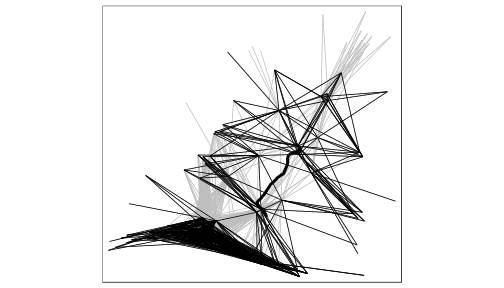
What about perpendicular lines (severance)?

The same method!
19 / 25

3: Access to stations (Credit: M. Morgan)

  • Divide each route into 3

20 / 25

How to deal with long, windy routes?

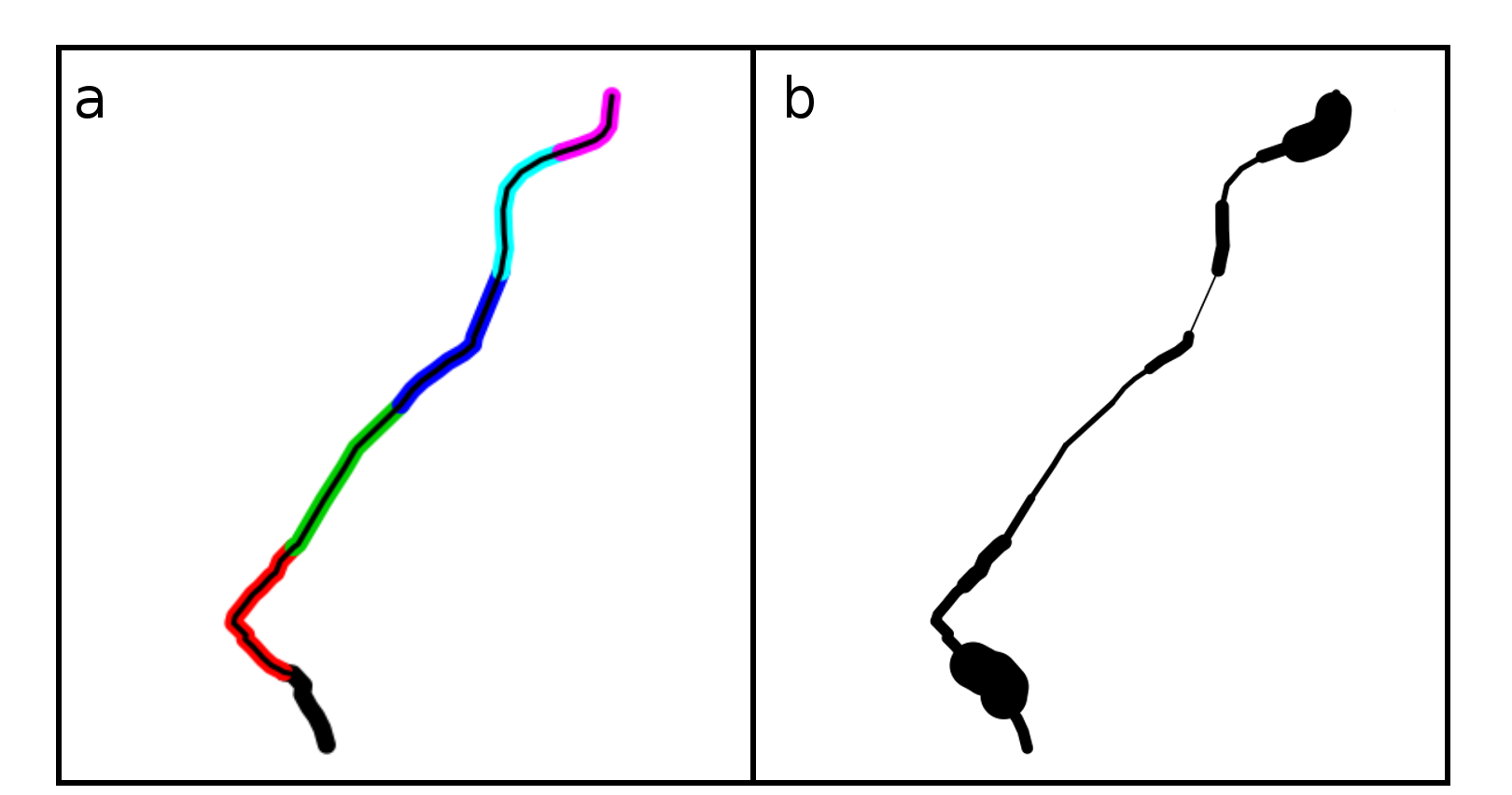
  • Break the train line into segments
Method of splitting the route into discrete segments using the line segment function from the stplanr R package (a) and cycling potential severed (b).

Method of splitting the route into discrete segments using the line segment function from the stplanr R package (a) and cycling potential severed (b).

21 / 25

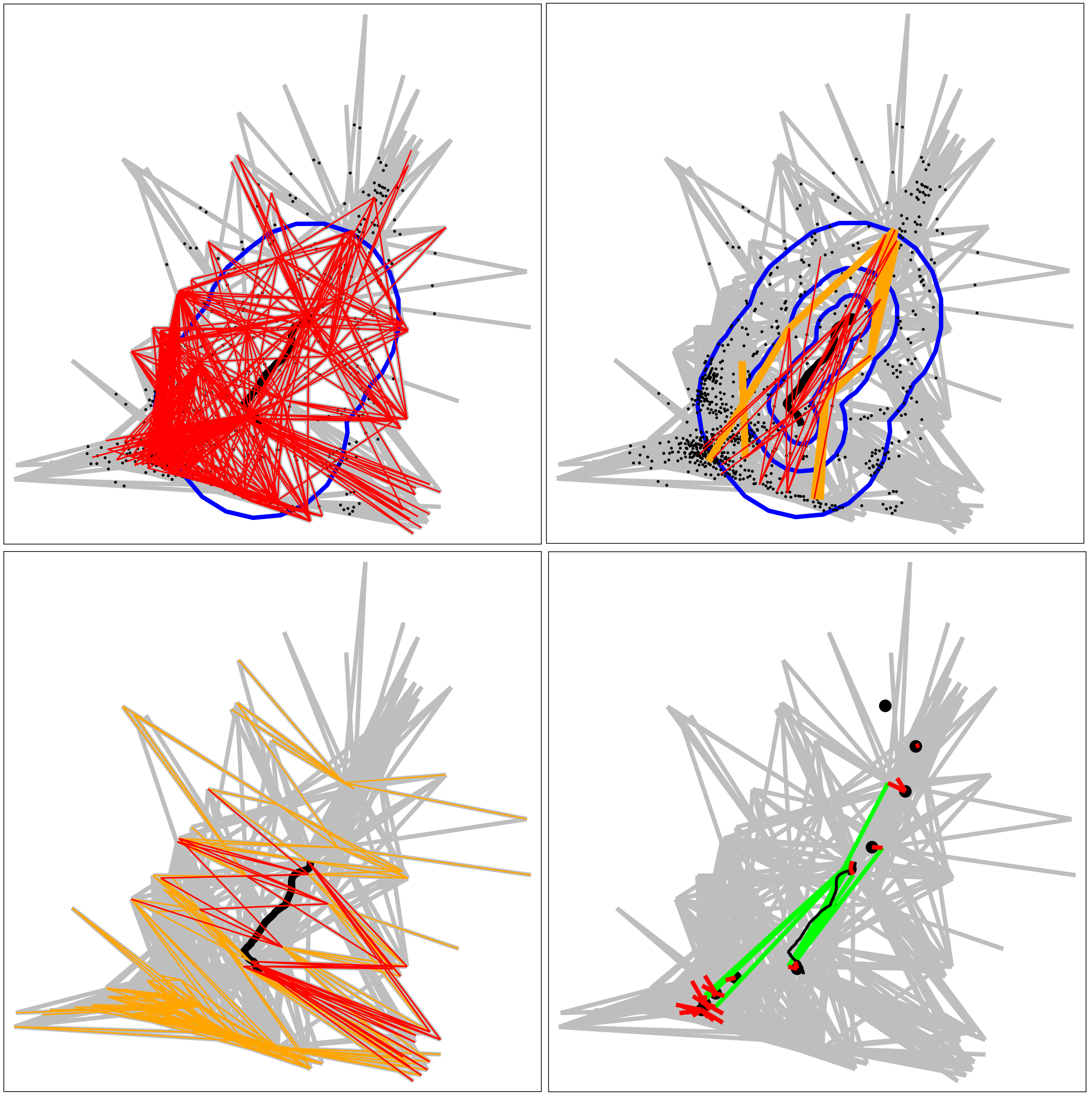
All methods together

Centre point-buffer (a), parallel (b), perpendicular (c) and station access (d) methods.
Centre point-buffer (a), parallel (b), perpendicular (c) and station access (d) methods.

22 / 25

Cycling opportunities and threats

Scenario N. commuters N. cycling % cycling Distance (km, Euclidean)
Baseline
Touching buffer 53665 1537 2.9 11.9
Parallel selection 2583 28 1.1 13
Perpendicular selection 1678 21 1.3 18.5
Cycling to stations 574 3 0.5 17.9
Scenario
Touching buffer 53665 2568 4.8 11.9
Parallel selection 2583 61 2.4 13
Perpendicular selection 1678 36 2.2 18.5
Cycling to stations 574 49.5 8.6 2.6
23 / 25

Where next?

Source britishtramsonline.co.uk

24 / 25

Thanks!

Buehler, Ralph and Jennifer Dill (2016). "Bikeway Networks: A Review of Effects on Cycling". In: Transport Reviews 36.1, pp. 9-27. ISSN: 0144-1647. DOI: 10.1080/01441647.2015.1069908.

Lovelace, Robin, Anna Goodman, Rachel Aldred, et al. (2017). "The Propensity to Cycle Tool: An Open Source Online System for Sustainable Transport Planning". In: Journal of Transport and Land Use 10.1. ISSN: 1938-7849. DOI: 10.5198/jtlu.2016.862. URL: https://www.jtlu.org/index.php/jtlu/article/view/862 (visited on Jun. 01, 2017).

Ogilvie, David, Richard Mitchell, Nanette Mutrie, et al. (2006). "Evaluating Health Effects of Transport Interventions: Methodologic Case Study". In: American Journal of Preventive Medicine 31.2, pp. 118-126. ISSN: 0749-3797. DOI: 10.1016/j.amepre.2006.03.030. URL: http://www.sciencedirect.com/science/article/pii/S0749379706001693 (visited on Dec. 08, 2016).

Tajima, Ryo and Thomas B Fischer (2013). "Should Different Impact Assessment Instruments Be Integrated? Evidence from English Spatial Planning". In: Environmental Impact Assessment Review 41, pp. 29-37. ISSN: 0195-9255.

Thomson, Hilary, Ruth Jepson, Fintan Hurley, et al. (2008). "Assessing the Unintended Health Impacts of Road Transport Policies and Interventions: Translating Research Evidence for Use in Policy and Practice". In: BMC Public Health 8, p. 339. ISSN: 1471-2458. DOI: 10.1186/1471-2458-8-339. URL: http://dx.doi.org/10.1186/1471-2458-8-339 (visited on Dec. 08, 2016).

25 / 25

Contents

  • Context
  • The impacts of transport infrastructure
  • Methods
  • Results and discussion
2 / 25
Paused

Help

Keyboard shortcuts

, , Pg Up, k Go to previous slide
, , Pg Dn, Space, j Go to next slide
Home Go to first slide
End Go to last slide
Number + Return Go to specific slide
b / m / f Toggle blackout / mirrored / fullscreen mode
c Clone slideshow
p Toggle presenter mode
t Restart the presentation timer
?, h Toggle this help
Esc Back to slideshow